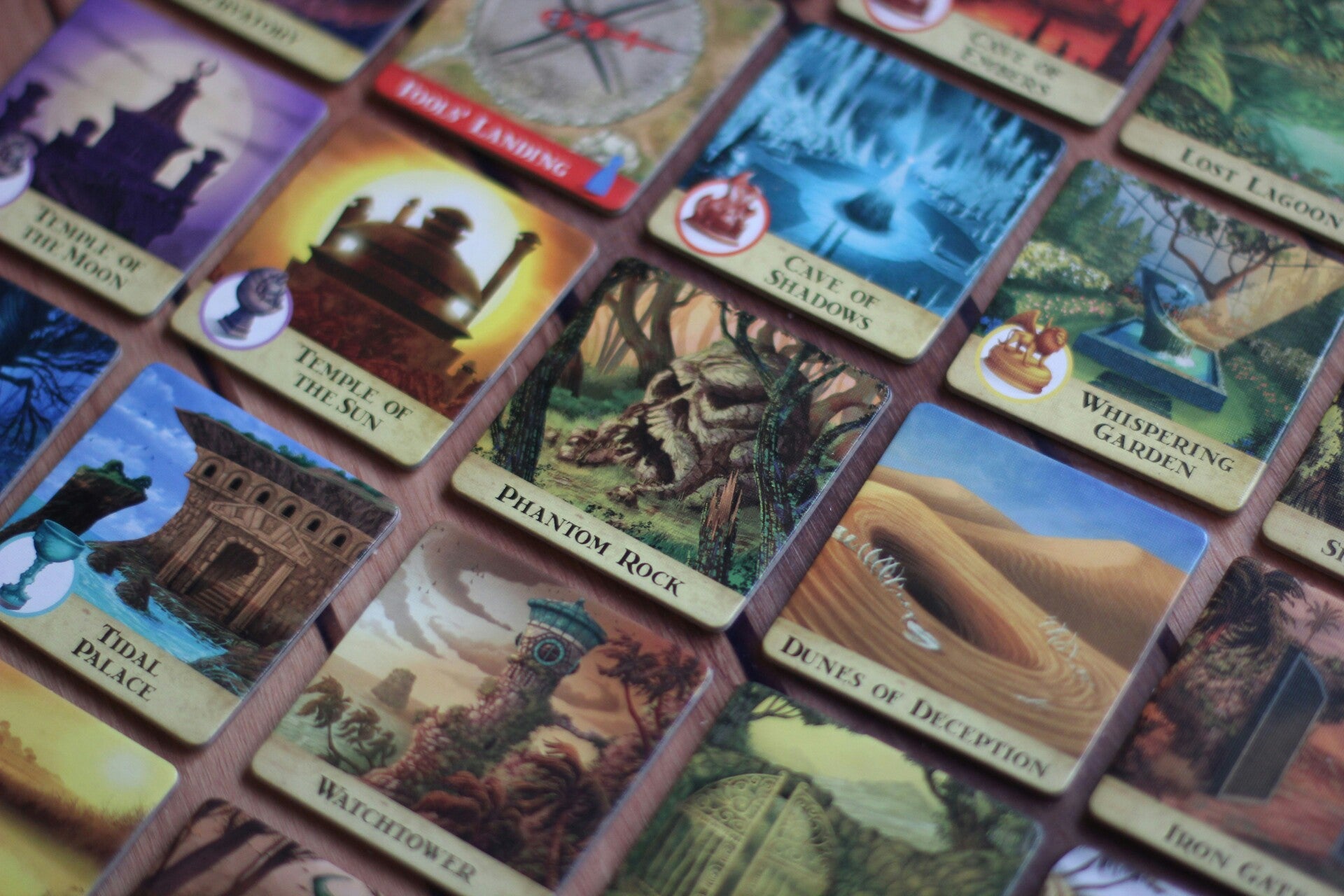
Sophie Gawryla, Trustee and Demogod at VoNCon, explores the difficult relationship we have with uncertainty, and how board games can be the perfect antidote.
In one psychology study, participants were told they might receive an electric shock. Some were told it would definitely happen. Others were told that there was only a 50% chance.
Surprisingly, the people who weren’t sure felt more anxious than those who knew for certain they’d be shocked.
It sounds counterintuitive, but it reveals something important: our brains often find uncertainty more stressful than something we know will be unpleasant.
And that has big implications for how we approach social situations.
Why we avoid things we actually want
Think about this: how many times have you stayed at home, even when part of you wanted to go out?
It’s not always because staying in feels good. Often, it’s because it feels predictable. You know what you’re getting.
Going out, meeting new people, or trying something unfamiliar comes with unknowns:
- Will I enjoy it?
- Will I fit in?
- Will it be awkward?
When we’re uncertain, our brains can interpret that as a potential threat. That triggers a stress response–what we often experience as anxiety.
So, we choose the “safe” option. But there’s a catch.
When we avoid uncertainty, we also remove the possibility of something going well. We trade the uncertainty of success for the certainty of nothing changing.
Over time, that can quietly reinforce the very feelings we are trying to escape–loneliness, boredom or low mood.
Why learning a game together changes everything
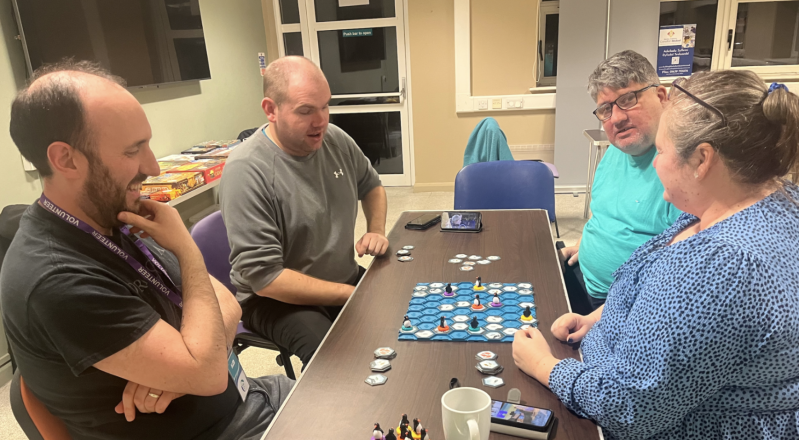
Now imagine sitting down at a table where nobody (except one guide) really knows the game.
All of a sudden, the isolating and personal feeling of that uncertainty shifts. This is because everyone starts in the same place. Everyone is a little unsure. And everyone is figuring it out together.
That shared uncertainty becomes something to lean into, rather than something to avoid.
People forget the rules. Someone asks the same question three times. Another person makes a completely accidental (but somehow brilliant) move and ends the turn more confused than when they started.
But instead of thinking, “I don’t know what I’m doing,” it becomes: “None of us do–and that’s actually part of the fun.”
The power of a guide (or demogod)
Having one person who knows the rules makes a big difference. At VoNCon, for example, our brilliant Demogods are there at every gaming session to guide and support players.
They provide just enough structure to keep things moving, without removing that sense of discovery. In psychology, this is known as scaffolding.
Good “game teachers” don’t overload people with rules. Instead, they:
- Explain things step by step
- Let people learn through playing
- Step in when needed, but not too much
This keeps the experience manageable and, most importantly, shared.
Building a “tolerance for uncertainty”
Psychologists sometimes talk about our tolerance for uncertainty. In other words, how comfortable we are with not knowing what’s going to happen next.
This tolerance isn’t fixed, it’s a skill we can all learn. And like any skill, it improves with practice.
When people regularly engage with small, low-stakes unknowns–like learning a new game–they start to:
- Feel less threatened by uncertainty
- Approach new situations with curiosity instead of fear
- Become more flexible and resilient
There’s even a concept called “safe uncertainty”, which means knowingly putting yourself in situations where things will be unknown, but the stakes are low.
The effect of scaffolding, or gradually guiding players through an uncertain situation, helps to reframe that uncertainty into something different.
Playing a board game for the first time is a perfect example. Nothing serious is on the line, but your brain still gets to practice handling the unknown one bit at a time.
Why games work so well
Games create the ideal environment to increase your tolerance for uncertainty, and connect with other people, because they provide clear focus and natural conversation starters.
You don’t have to “make conversation” from scratch–it happens naturally when you ask:
- “Wait, what does this do?”, or
- “I think I’ve completely messed this up…”
And then comes the smiles, the laughs and the shared experience of learning the game together.
In fact, here’s something worth remembering: the games where everything goes wrong are often the most memorable.
A badly timed move or a misunderstood rule doesn’t ruin your experience, it creates a story that you have shared with other people around the table. Before you know it, you’ll have inside jokes and lasting memories.
It is these experiences that tell us it’s okay to be uncertain and it’s okay to be imperfect. It reminds us that the goal is enjoyment, not performance.
Why doing it together matters
Social connection plays a huge role in how we handle uncertainty.
When we go through something uncertain alone, it can lead to overthinking, self-criticism or withdrawal. And that’s if we didn’t simply avoid the uncertainty altogether in the first place.
But when you share that experience with others, it reduces pressure and normalises not knowing. This challenges a common misconception: you don’t need to remove all of the uncertainty around something before you begin.
In fact, the opposite approach often works better.
Starting with a rough understanding and figuring things out as you go encourages communication, builds confidence and creates opportunities for you to increase your tolerance for uncertainty.
Final thoughts
If uncertainty is something your brain tends to avoid, you’re not alone. It’s a deeply human response.
But the way to get more comfortable with it isn’t to eliminate it, it’s to experience it in safe, shared ways. And the more we practice this, the easier it becomes to say yes to the next unknown.
So, what’s the best way to start?
Come along to a VoNCon gaming session. Show up. Keep showing up. And keep inviting others in.
About the author

Sophie Gawryla is a Trustee at VoNCon, leading on communications and digital marketing. She also volunteers as a Demogod at VoNCon's gaming sessions on the first Saturday of the month at Bryncoch Community Centre.
Please add a comment below or contact Sophie through info@voncon.org to discuss her post.
Add comment
Comments