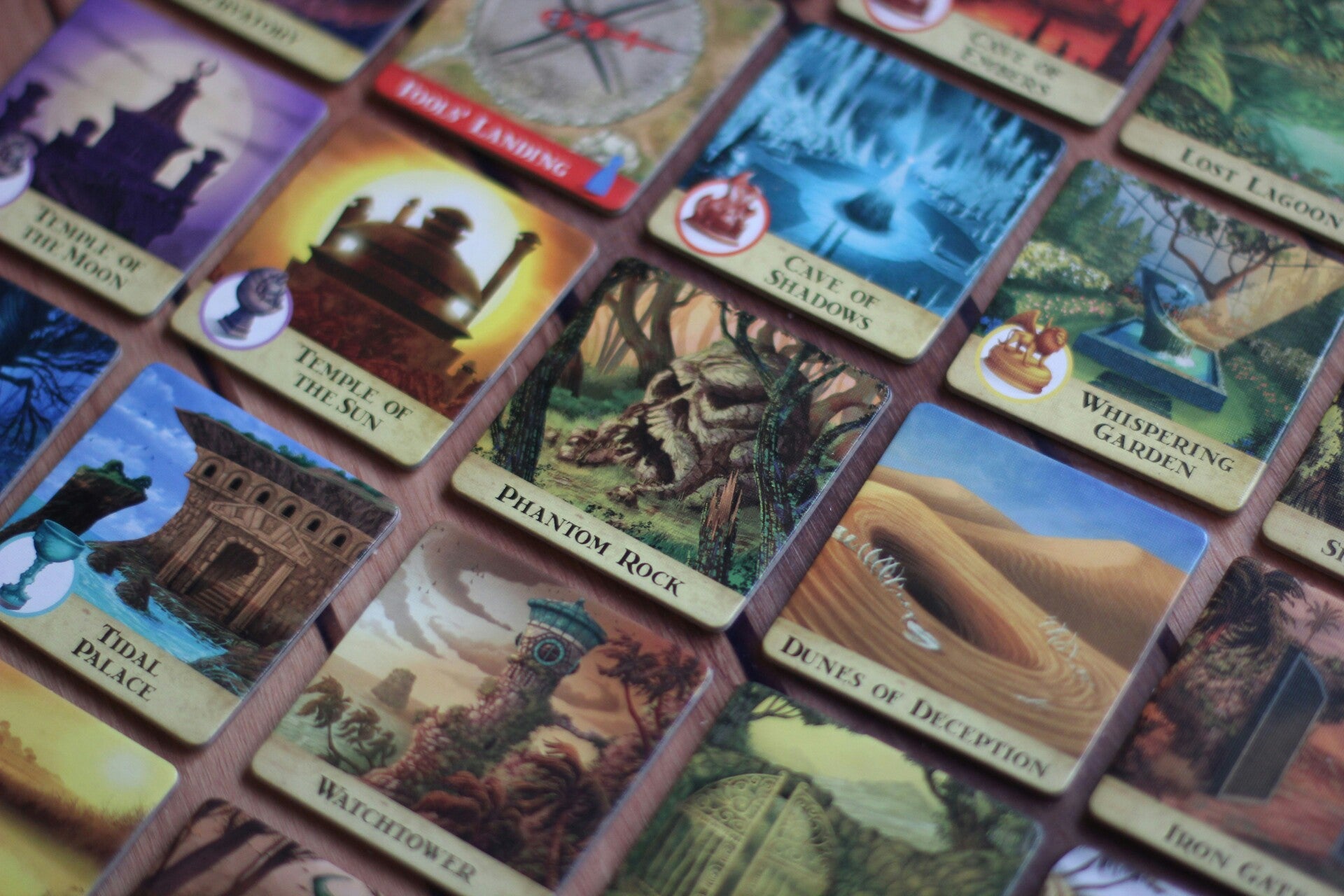
Max Gawryla, Trustee and Demogod at VoNCon, introduces role playing games and invites you to join us for free RPG day later this month.
Later this month, VoNCon will be hosting a free introduction to roleplaying games called Free RPG day! If you’ve ever been curious about roleplaying games, which is what RPG stands for, but weren’t quite sure what they involved (or perhaps assumed they weren’t for you) we’d love for you to come along and try one.
Our special Free RPG Day event will be held at Bryncoch Community Centre from 4pm to 8pm. This is a ticketed event, you can book your spot for free here.
In this blog post, we wanted to answer a related, but different, question: why do roleplaying games exist at all? After all, most hobbies have their obvious purposes. For example, sports provide competition and exercise, board games provide puzzles, strategy and social interaction, reading gives us insight into other worlds allowing us to experience stories.
Roleplaying games do all of these things to some extent, but they also do something unusual and fundamentally human: they give us permission to play pretend.
RPGs: the only place adults can play pretend?
Back when I was a child, my next-door neighbour and I spent our summer holidays sword fighting monsters, piloting spaceships, and using our superpowers to save the world. We did all of this from the comfort of our back gardens. We would create entire imagined worlds, governed by rules we made up as we went along. It was effortless fun, and often all we would need is to find a particularly cool stick.
Almost everyone has had this experience to some degree or another.
The specifics of what you were pretending don’t really matter. What matters is that most children spend countless hours inhabiting imaginary worlds. Developmental psychologists have long recognised imaginative play as an important part of childhood development, helping children explore social situations, practice communication and experiment with different identities and possibilities.
For children, pretending is not unusual; in fact, it’s expected. Adults encourage it, schools facilitate it and parents celebrate it.
Then, at some point, without us noticing, it stops. We are encouraged to become productive rather than playful, swapping out pretend for practicality. However, the desire to pretend never really disappears.
Consider the franchises with the most passionate fandoms, and which often become a part of a person’s personality rather than just entertainment products. Think Star Wars, Lord of the Rings, Game of Thrones, Star Trek, Marvel or DC Superheroes.
Fantasy and science fiction (and speculative fiction as a whole) may not necessarily be the largest genre by sales, but they’re unmatched in their ability to become part of people’s identities.
Fans don’t consume these stories in the same way as they would a detective novel, they integrate themselves into these worlds. The impulse that leads adults to cosplay as superheroes or spend thousands on vacations in Star Wars theme parks is the same impulse that makes tabletop RPGs so captivating. Roleplaying gives us the opportunity to become participants rather than just observers.
What actually is a roleplaying game?
If you’ve never played in an RPG before, it’s easy to imagine that roleplaying requires acting skills, strange voices, or an encyclopaedic knowledge of fantasy worlds. In reality, they’re much simpler than that. Effectively, a roleplaying game is a conversation between friends that tells a story, usually with a few rules attached.
The main difference between an RPG and most of the board games we have introduced to attendees at VoNCon is that the players themselves, rather than a rule book, get to decide how that story develops and ends.
Most roleplaying games today are structured with one person who will describe a situation. This person, often called the Game Master (or GM), will be responsible for running the game, providing descriptions of the world and everyone the players meet–whether friend or foe!
The GM might start the game by giving the players an objective. For example, players may need to work together to slay a monster, save a kidnapped friend or find out the cause of a curse afflicting a village. Other times, the players may need to explore the world they find themselves in and find their own adventure.
What does this look like in practice? Well, the GM might tell the table, “You arrive at a small village at the edge of the forest. When you enter, the locals seem nervous. You see posters and sketches hanging at the town square of several people who have disappeared from town in recent weeks.”
Then, everyone else at the table will decide what their character would do. Maybe they go to the local pub to ask some questions. Maybe they will investigate to see if they can find any clues as to where they’ve gone. Maybe, they have bigger problems on their hands and decide it isn’t worth the time to dig deeper.
Usually, something decides whether they succeed or fail in carrying out an action (like a dice roll), then the GM responds to their choices, and together, as a group, the players create a story nobody knew in advance.
Unlike a novel, nobody knows exactly how the story will end. Unlike a board game, there isn’t a list of what you are and are not allowed to do. You can attempt almost anything you can imagine. The gameplay shifts from ‘What moves am I allowed to make?’ to ‘What would my character do?’

The connections this creates
At VoNCon, we spend a lot of time thinking about games as social tools. Board games are wonderful because they provide structure for social interaction. You don’t need to make endless small talk because everyone is already focused on a shared activity.
Roleplaying games achieve something similar, but in a completely different way.
As we’ve discussed before, modern adult life is, frankly, not terribly well-designed for making close friends. The kind of deep, ongoing, shared experiences which foster real friendships is increasingly hard to come by, with The Campaign to End Loneliness estimating that approximately 3.83 million people in Great Britain experience chronic loneliness.
We have work, family, and if we’re lucky, a hobby or two.
Roleplaying games can help to bypass some of that problem by encouraging participants to be put into shared circumstances.
When sitting down to a roleplaying table, nobody asks, “So tell me what you do for work.” Instead, the question is “How are we going to get into this castle?” or “Do we trust this mysterious stranger?” The conversation begins with the game and the friendships develop naturally around it.
More importantly, roleplaying games create something that many adult activities struggle to provide: shared stories. The series of disastrous decisions which somehow worked out, the necromancer the party loved to hate, or the group’s nickname for a grumpy goblin become collective memories created together.
Very few hobbies are able to generate those kinds of experiences on a regular basis.
It's also just good fun
There is a risk, in making the case for RPGs as a vehicle for human connection, of making the whole thing sound rather earnest. A good session at the table is, among many things, frequently hilarious.
The dice in RPGs introduce uncertainty into everything. When your character attempts something uncertain, challenging or risky, you roll and the result can be triumphant or catastrophic. The rules are there to make failure interesting rather than punishing. A bad roll doesn’t end your game or ruin your chances of ‘winning.’ It just takes the story in an unexpected direction.
We know it can be intimidating to sit down at a table, especially with people you may not be intimately familiar with. In fact, the most common reason people give for not trying RPGs is that they worry about getting it wrong or not being creative enough.
I think this comes from a misunderstanding of what creativity actually looks like and, whilst it’s absolutely worth acknowledging these concerns, a roleplaying game does not require you to write a novel or take improv lessons.
It asks you to imagine a situation and answer the question: “What do you do?” And then have fun with it.
On top of that, VoNCon is here to help. We have friendly DemoGods who are ready to help you dive into this terrific hobby. If you’ve enjoyed modern board games, there’s a very good chance you’ll find something to appreciate in roleplaying games as well.
How can you get involved?
We hope you’ll join us for a special Free RPG Day event on Saturday, June 27th at Bryncoch Community Centre from 4pm to 8pm.
No prior experience is required, we will walk you through any rules before the games. Just come along, meet some people and see what happens when a group of adults decides to play pretend for an evening. We also will be offering refreshments for a small, suggested donation.
More details will be announced on our website and, for our current members, on our WhatsApp group.
This is a ticketed event. You can find out about the games on offer and book your place for free here.
About the author
Max Gawryla is a Trustee at VoNCon, leading our outreach and fundraising events. He also volunteers as a Demogod at VoNCon's gaming sessions on the first Saturday of the month at Bryncoch Community Centre.
Please add a comment below or contact Max through info@voncon.org to discuss his post.
Add comment
Comments