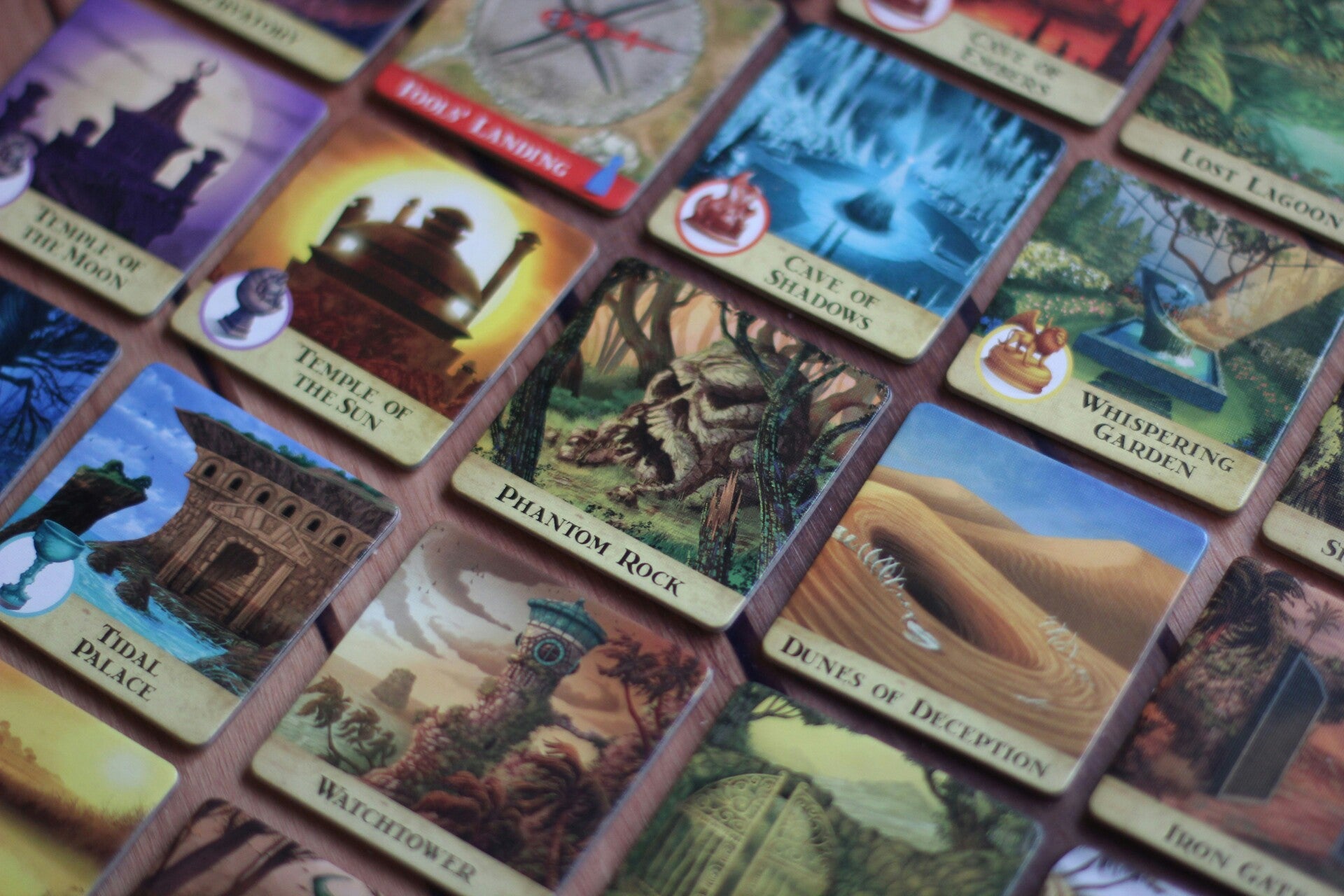
Max Gawryla, Trustee and Demogod at VoNCon, talks about third spaces and how VoNCon fills an ever increasing gap in our community where third spaces used to be.
If you’re anything like me, the time between our monthly sessions - the weeks when the repeating cycle of work to home to sleep seems to be all encompassing - can feel a bit grey. It can make you realise how quiet things have grown and how much you were looking forward to getting back around the table with others.
Maybe you aren't yet a VoNCon attendee, but you've noticed how difficult it is to meet adults and foster friendships in an inexpensive way.
Or perhaps you came to one of our events in the first place because things had gone too quiet, or because the places you used to go, the things you used to do, and the routines that kept you connected had slowly disappeared.
If any of these resonate, you aren’t imagining it. It’s happening not just across the country, but around the world, and it might be a bigger issue than you think.
This is where spaces that make you feel comfortable, relaxed and connected to others - ones that aren’t your home or work - come in.

What is a third space?
Sociologists have a specific term for these regular places in our lives that are neither home nor work: third spaces.
They are informal, accessible environments where social life happens naturally and without agenda. Places like the local pub, the library, the community centre are all third spaces. Often, these places ground us, establish a community, and make us feel like we belong somewhere.
The concept was first developed by sociologist Ray Oldenburg in his 1989 book "The Great Good Place". Even though the term ‘third space’ only dates back to the 80s, the phenomenon he described is as old as society itself.
What Oldenburg observed was that healthy communities have always depended on a third layer of social life, beyond the private world of the home and the transactional world of work, where people could gather freely and feel part of something larger than themselves.
In the UK, third spaces have taken many forms across the past few centuries. Coffeehouses in the 17th and 18th century were hubs of political debate and intellectual exchange (and were responsible for some of the greatest scientific innovations in Britain's history).

Coffee shops are historically "places where people gathered to drink coffee, learn the news of the day, and perhaps to meet with other local residents and discuss matters of mutual concern".
Similarly, working men’s clubs in post-industrial northern towns offered refuge, recreation and solidarity.
Parks, libraries, youth clubs and community centres have all, at various points, served this function. The unifying quality across all these examples is accessibility: these are all places that don’t require a great deal of money, prior arrangement or established friendship group to walk into.
Although these places are historically vital to society, modern day third spaces - for example, pubs and libraries - have been dramatically declining in number in recent years, and their loss might have a much bigger fallout than you'd expect.
The scale of what we're losing
What might be the most obvious loss, at least here in the UK, is the decline in pubs, which have long been considered to be the cornerstone of British community life.
Pubs have been disappearing at a relentless pace. The UK once had approximately 69,000 pubs in the 1960s. By 2009, there were around 54,000, but by 2022, that number had fallen by over a quarter to below 40,000. In 2024, the rate of closures continued at more than one pub per day across England and Wales.
But the raw numbers only tell part of the story. The pubs that remain have themselves changed significantly. The first gastropub, The Eagle in London, first opened in 1991, offering higher quality food than the typical, quick-and-easy fare. What followed was a slow but decisive transformation of the sector.
Today, as Historic UK notes, most pubs serve food, and many are now more restaurant than traditional pub, with the public bar that was once full of chatter and discourse replaced by dining tables.
This subtle change from “the local” to the gastropub influences the way the space is used. Whereas the former allowed for a space where you could be without being required to consume your way through the experience, that function is much harder to find in a venue whose business model depends on table turnover.
Libraries have fared little better. Government spending on libraries fell by nearly 50% in real terms between 2009 and 2025, and over 800 libraries have closed across Britain since 2010.
Libraries are one of the last widespread, genuinely free third spaces where you could sit, read, and exist in the company of others without spending anything. Their closure removes something that cannot simply be replicated online.
Over a third of people in the UK now say there are far too few community spaces in their local area.
The illusion of a digital substitute
The obvious response to the loss of physical social spaces is that we now have digital ones. We have group chats, social media and video calls. We are, by most measures, more connected than any other time in history.
And yet, as we've previously covered on our blog, loneliness in the UK has not decreased. In fact, the Office for National Statistics reported in 2024 that nearly 8 million people are often, or always, feeling lonely.
When we follow people's lives on social media, we develop a kind of low-level, almost peripheral sense of being in contact with them. Researchers call this ‘ambient awareness.’ It feels, in a diffuse way, a little like being around people. Like picking up on someone's mood from across a room.
The problem is that it can create an illusion of closeness that reduces our motivation to actually seek each other out. If you already know, broadly, what your friends are up to, the urgency of actually meeting up feels less acute. You feel, in some vague sense, as though you've already checked in. The relationship feels maintained, even when it isn't really.
Research into social media use supports a useful distinction here between active and passive use.
Active engagement (messaging someone directly, or having conversations) can genuinely support relationships.
However, passive consumption (doom-scrolling or just exploring your feed) is consistently linked to poorer wellbeing outcomes, greater loneliness, and, in a somewhat cruel irony, a higher sense of fear of missing out despite spending more time nominally ‘connected’.
The more we watch from the edges of other people's social lives, the more absent we feel from our own.
So, what takes their place?
So far, all of this paints a pretty grim (or at least uncomfortable) picture. It does, however, help to explain why so many of us feel the way we do about modern life.
It also sets the stage for where VoNCon comes in, and why the tabletop is a compelling solution to the problem of declining third spaces.
It's no coincidence that VoNCon, an organisation targeting loneliness and social isolation, is so enamored with board games, role playing games and all things tabletop.
It's because a game does something that a social media feed cannot: it requires your actual presence. It asks you to sit across from other people, pay attention to them, respond in real time, and share something with them that cannot be replicated in ambient scrolling and passive engagement.
As we've discussed before, the social pressure that makes showing up to new places feel hard is quietly redistributed when you attend a gaming session.
Instead of needing to know what to say, you need to know whose turn it is. Instead of performing socially, you're just playing. Conversation happens not because you've forced it, but because the game creates the conditions for it to emerge naturally.
Research increasingly supports what many people find intuitively true: that regular board gaming can reduce feelings of loneliness, help people build a sense of belonging, and improve mental health outcomes. This is particularly true for adults who struggle to find spaces where they feel comfortable showing up as themselves. These effects aren't dramatic or instant — they build, game by game, month by month.
What we do at VoNCon
VoNCon was founded on a simple idea: that the tabletop is one of the most genuinely accessible third spaces left; one that doesn't require a building owned by a cash-strapped council, or a business model that depends on you spending money to justify your seat.
Our monthly gaming sessions are free to attend, open to everyone, and run by volunteers who believe that showing up is the hardest part and who do their best to help smooth off the challenge of learning a game, and make it a little easier to get to the fun.
What you won't find is the pressure to consume, perform, or justify your presence. While we will always accept donations at our events to help us keep doing what we do, we mostly just want to see you turn up.
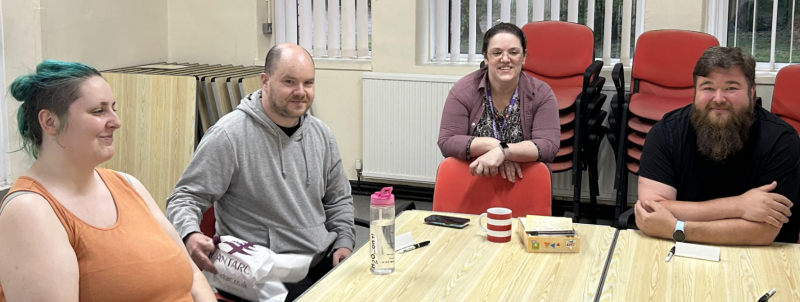
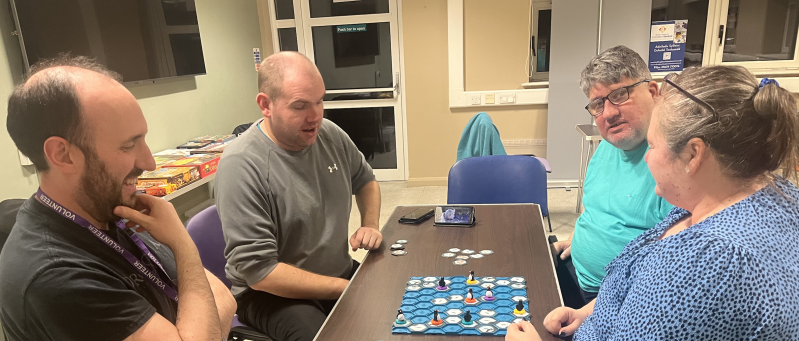
Check out our upcoming and regular events, we would love to see you soon!
About the author

Max Gawryla is a Trustee at VoNCon, leading our outreach and fundraising events. He also volunteers as a Demogod at VoNCon's gaming sessions on the first Saturday of the month at Bryncoch Community Centre.
Please add a comment below or contact Max through info@voncon.org to discuss his post.
Add comment
Comments
Excellent article.
Have you thought of distributing to local GPs, can help patients with isolation, connecting & low mood. Boardgaming also excellent for brain health & plasticity by doing something new, different.
Also places such as training centres, libraries, community centres even churches. Community info magazines where they put dates for local activities. Shop notice boards, etc.
your doing fabulous with your articles. They’re well wrote out, informative & interesting.
Apologies I realise you’re very bright & probably thought already but just in case.
Hi Penelope, I'm glad you're finding them interesting! If you have any ideas of what you would like to learn/read about, please let me know.
Your idea about local GPs is excellent - and one that I hadn't thought of before. It's going on the list to look into!