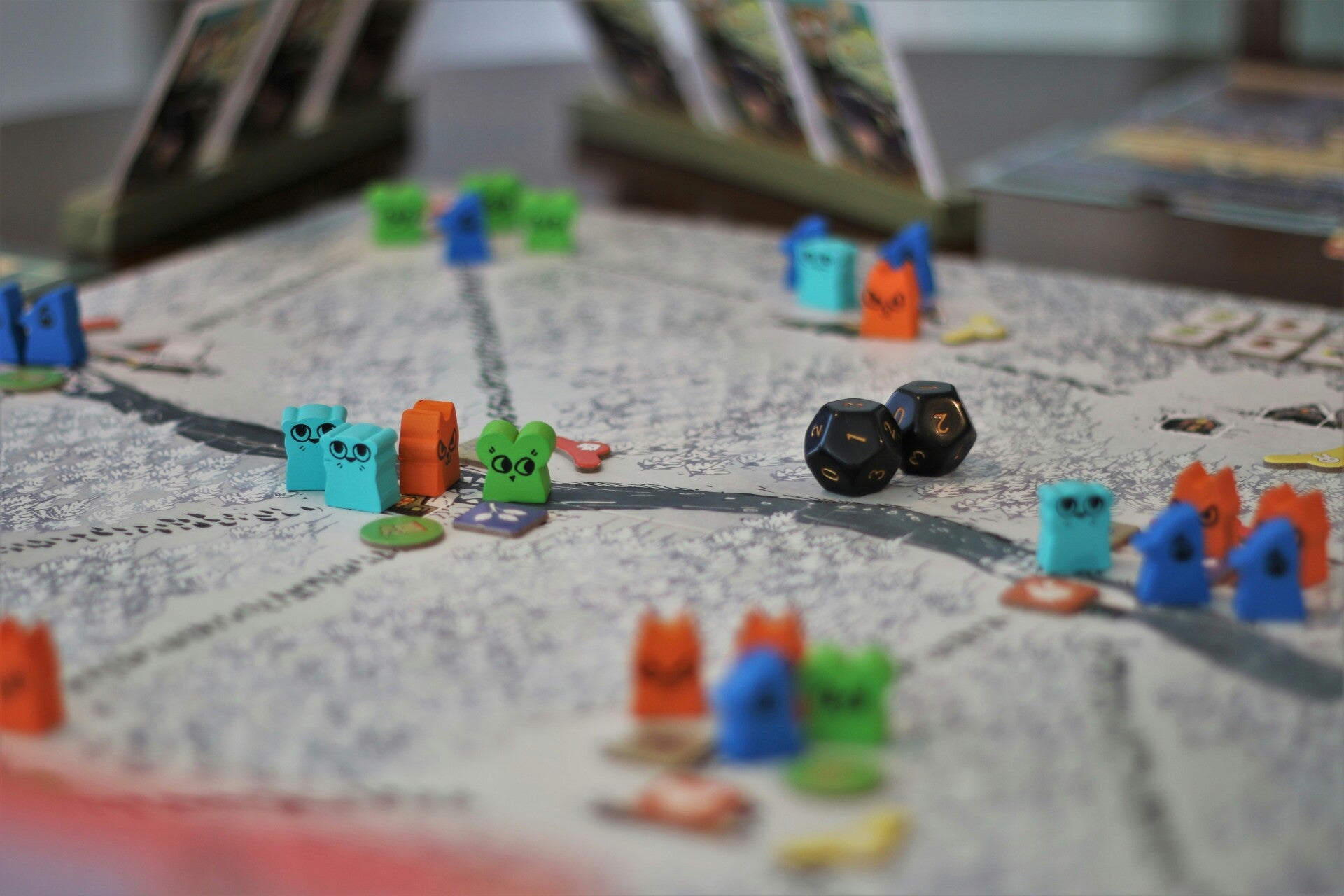
Max Gawryla, Trustee and Demogod at VoNCon, explains what he looks for in a game and why his favourite games are ones which can't always be solved
“The ability to play chess is the sign of a gentleman…”
By most measures, chess is the most successful board game in history. It’s been played for over a thousand years and shows no signs of slowing down. You’ll find it carved into stone tables in New York City’s Central Park played by strangers for money on any afternoon. Chess clubs are so commonplace, they barely register as notable; nearly every school, community centre, and library has one. It may be the only non-sporting game where the names of champions are known outside of enthusiasts; you don’t have to follow chess to know Bobby Fisher, Gary Kasparov, or Magnus Carlsen. Owning a chess board is no more uncommon than owning a deck of cards or a set of dice. It is, by all accounts, one of the greatest games ever made.
I don’t like chess.
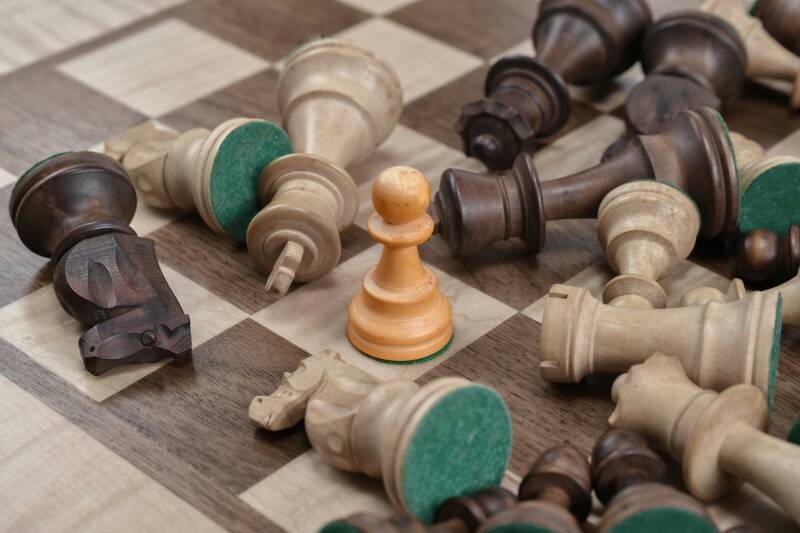
Don’t get me wrong, I loved it growing up and I will still enjoy a friendly match against someone who likes-but-doesn’t-love chess from time to time. But somewhere along the way, the game stopped being a game for me. Once I understood the systems well enough to play even semi-competently, I came to a fork: I could either memorise openings and gambits to deploy them accurately in games, or I could lose over and over to people who had.
In many ways, chess at that level stops rewarding you for thinking in the moment and starts rewarding you for having read the right book and being able to identify a pattern. It becomes less like play and more like a maths problem with an answer key that some people have already seen
And I don’t want to marsh anyone’s mellow or yuck their yum - that’s a perfectly valid thing to enjoy, but it’s not what I show up to a game for.
“Everything should be made as simple as possible, but not simpler”
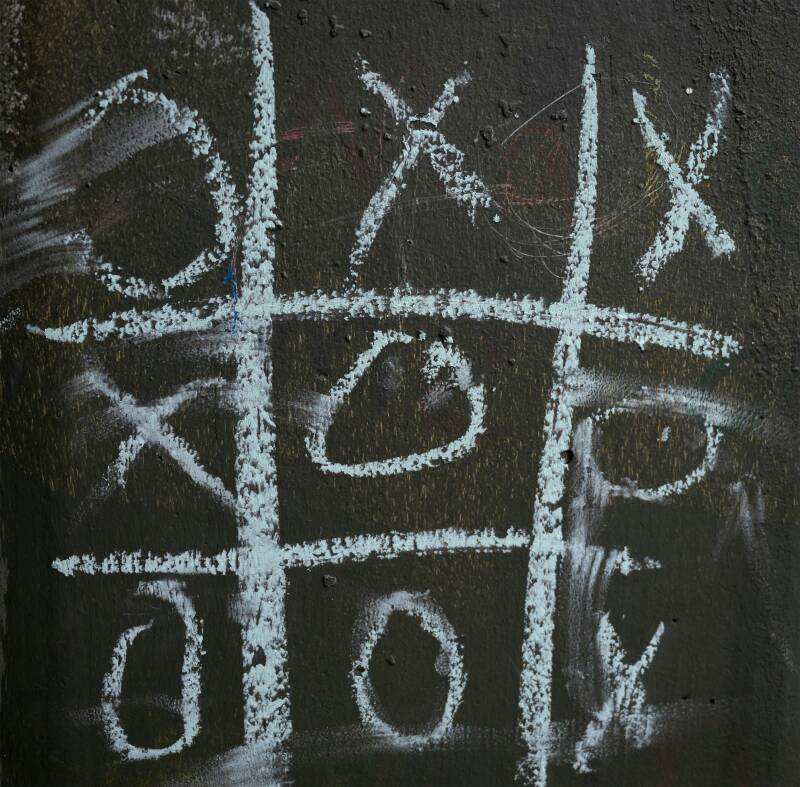
I want to contrast chess with the opposite extreme: noughts and crosses.
I don’t like noughts and crosses.
But I don’t like it for a very different reason to chess. Once you and your opponent both understand the game, every game ends in a draw and there’s nothing left to discover. You can play again, but you’re just going through the motions of a solved problem unless someone makes a mistake.
Or we can look at another example: Candy Land.
I don’t like Candy Land.
You draw a card, move to the matching colour, repeat, and whomever reaches the end of the track first wins. By my own pillars I discussed a few weeks ago, Candy Land isn’t even really a game; there’s no decision anywhere in it. Once the deck is shuffled and the first player is chosen, the game is scripted and the winner is decided; you just have to go through the motions to figure out who it is.
Neither noughts and crosses nor Candy Land fail for adults because they’re “too simple” in some snobbish sense; they fail because there’s no novelty left to find. Nothing changes based on what you do. And a game with nothing left to discover is, simply put, boring.
Chess and Candy Land are obviously opposites, but I believe they fall short of most games for a similar reason. At a certain point, the former asks you to stop discovering and start reciting; the other didn’t give you anything to discover in the first place. For me, both end the same way: with me disengaging.
“Clowns to the left of me, Jokers to the right, here I am…”
Somewhere between “memorise the answer key” and “just follow the script” is where every game I love actually lives. For me, the best part of any game is the process of figuring out how it works. Not reading a summary of how it works, but actually pulling the levers myself and seeing what happens. What keeps me coming back to the hobby is that feeling of discovering a game and putting the pieces together in my head.
A rulebook can tell you what a card does. It can’t tell you every implication playing it might have. That moment where the pieces slide into place or one rule provides just enough friction that the game feels like a twist is the real hook.
This is why the games that hold my attention longest tend to be interactive or have some random element (a deck of cards, a roll of dice, etc.) that makes it so that there’s no real ‘one best move.’ The ones where your decisions actually reshape the game state rather than just moving you along a track.
One clear example of this is my favourite game of all time: Root. I don’t often recommend it to people because it is one of the most involved, interactive, decision-heavy games I own. I have gone to tournaments to play this game competitively, I listen to Root podcasts, I own Root clothing, I even carved artwork from the game on pumpkin for Halloween.

Safe to say, I love this game, but I say all this with the disclaimer that it’s a complicated game, and I know people who have absolutely hated it. Regardless, it is my number one of all time and, after years of playing it, I still find new interactions every time I play.
I didn’t get good at Root by reading strategy guides and memorising lines the way you might for chess. Sure, I’m part of a larger Root discourse online, but that hasn't really made me better at the game, I just like listening to people's opinions on my favourite game. I am a prime example of how consuming strategy guides does not make you good at the game.
I know the rules to this game like the back of my hand because I’m experienced at it, not that I’m a master strategist. I learned the game by playing it badly, a lot, and letting the dice knock my plans sideways and adjusting. I still lose more often than I win. But the learning is the fun part. I still find something new to learn with every new game, be it strategy, interesting interactions, or just a fun tactic.
No matter how many times I play this game, I don’t think I’ll ever ‘solve’ Root. And realistically, I don’t want to. Being able to take something new out of every game I play is what makes the experience so rewarding.
So why not come to one of our next events and find your favourite game; you don’t even need to know how to play it yet.
About the author

Max Gawryla is a Trustee at VoNCon, leading our outreach and fundraising events. He also volunteers as a Demogod at VoNCon's gaming sessions on the first Saturday of the month at Bryncoch Community Centre.
Please add a comment below or contact Max through info@voncon.org to discuss his post.
Add comment
Comments