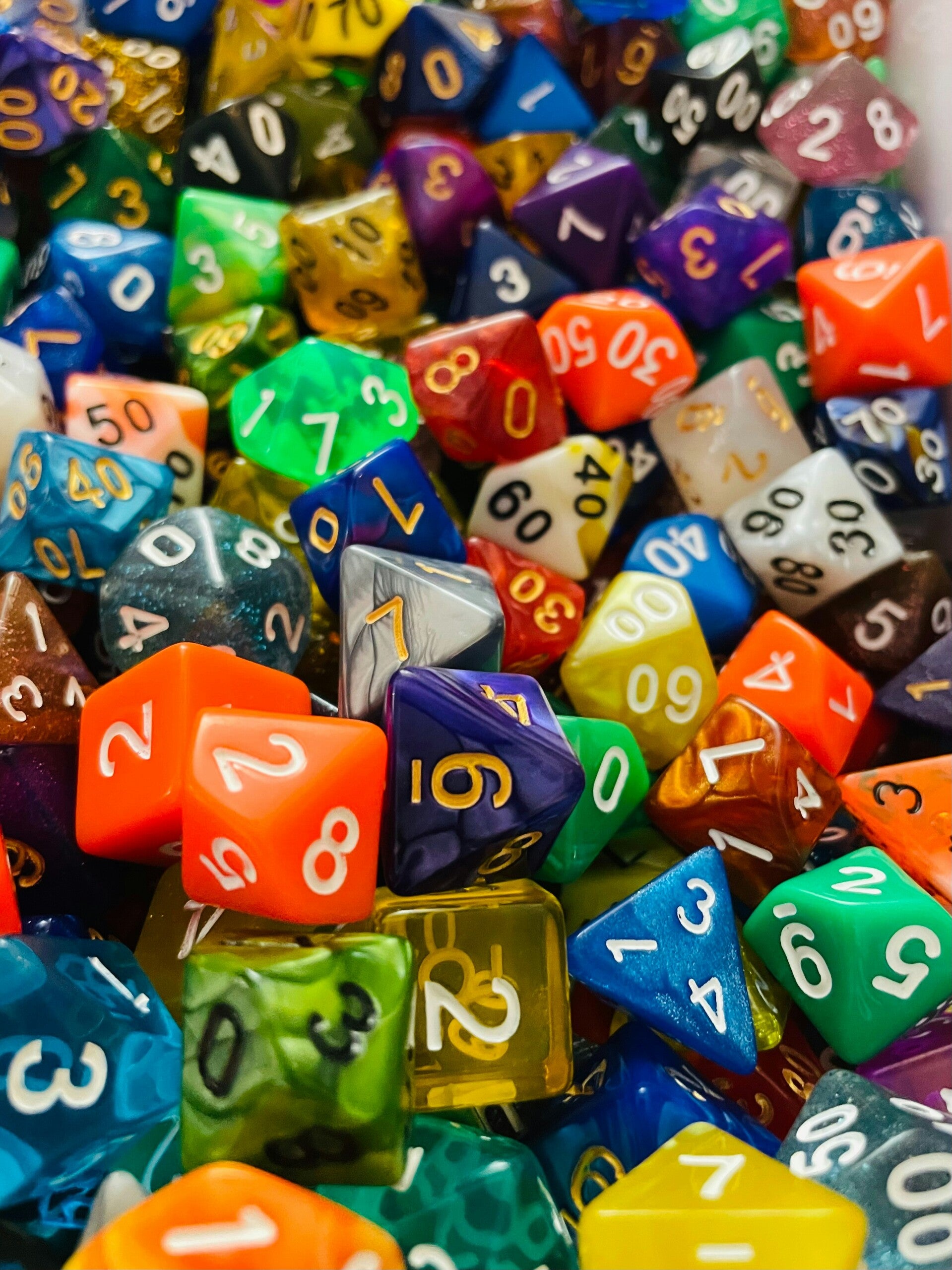
Ahead of our inaugural Community Campaigns Role Playing Game session, trustee and DemoGod, Max Gawryla, suggests why you should try RPGs other than just D&D
As an avid board gamer, one of the most common tropes I face when discussing the hobby with non-enthusiasts is the discussion of Monopoly. Seemingly everyone has played Monopoly (even if most people are playing it with their own house rules).
Now, let’s imagine that someone told you they played a single game of Monopoly and decided that, because it dragged on too long, caused hurt feelings between friends or family, and was just too much maths, they hated board games. I suspect that most gamers would scoff and say (with at least an ounce of contempt), “You can’t actually say you hate board games! You haven’t tried real board games though! You’ve only played Monopoly!”
And to some extent, the contemptuous board gamer would have a point. Board games encompass a wildly vast range of genres, difficulties, themes and depth. The gap between a five minute bluffing game like VoNCon favourite Cockroach Poker, and a sprawling, economic simulation and negotiation game like John Company 2nd Edition (a game which takes several hours just to teach) is enormous. One game, like Monopoly, should not represent the whole hobby.
And yet, when it comes to tabletop role-playing games (TTRPGs), gamers tend to do exactly that. Most people’s mental picture of ‘playing an RPG’ is Dungeons & Dragons (D&D): a fantasy theme with swords and sorcery, players rolling a twenty-sided die and doing calculations, a slow crawl through combat that can eat half an evening on its own.
Unfortunately, because D&D boasts over 50 million players and is by every imaginable metric the most popular TTRPG in the world, it can be difficult or nearly impossible to find an in-person group with which to role play if D&D wasn’t for you.
On October 11th, VoNCon is starting up a monthly RPG session called Community Campaigns at BrewStone in Swansea, which will allow for longer, ongoing campaigns (instead of exclusively one-shot adventures which are typically held at public events), but also the opportunity for people to try out RPGs which aren’t D&D.
If you are a fan of D&D, don’t worry, we will still have tables running the world’s most popular RPG. But if you’ve bounced off D&D or just aren’t interested in dungeons, dragons or their fantasy-based game, I want to make the case for giving this hobby another try.
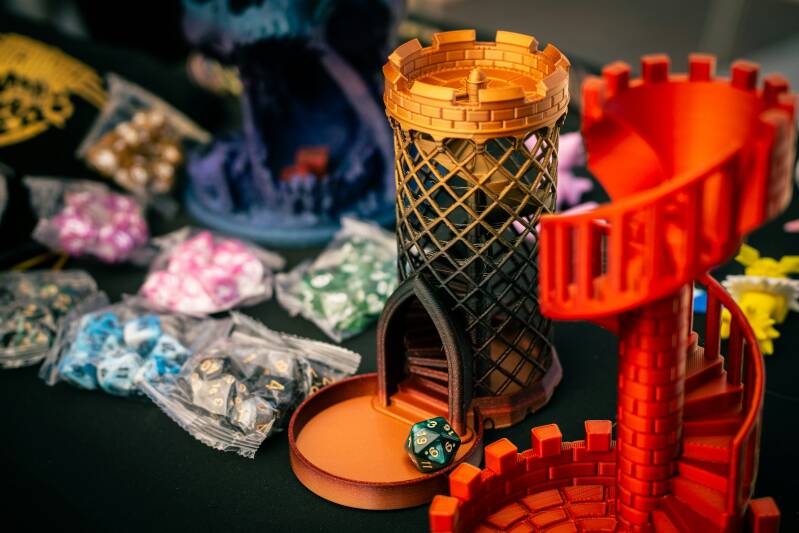
"But they all look the same!"
When it comes to board games, the differences from one game to the next are often apparent just by looking at the box or seeing how thick the rulebook is. Sometimes, you can tell the complexity of a game just by seeing how much table space it takes up or how beige the board is.
On the other hand, when it comes to RPGs, they all mostly look like people sitting around a table talking. Sometimes there’s a map in the middle of the table, but for the most part, from the outside, they look more or less the same. The games usually come in the form of a rulebook, which from afar can be understandably mistaken for a university textbook or a wizard’s tome.
What this means practically is that a huge amount of what makes one RPG different from another doesn't show up as page count. Designer Vincent Baker made a version of this argument in what’s now known as the Lumpley Principle: he pointed out that "system," properly understood, isn't just the dice-rolling parts of a rulebook. It's whatever procedure the rules lay down for establishing what's true in the story, and that procedure is a formal design choice the designer makes, the same way they choose hit point totals or spell lists. It shows up in things like:
- Who's in charge of the story: Some games hand one person, a "Game Master" or GM, permanent authority to decide what the world throws at everyone else, like a referee and narrator combined. Some games rotate that authority around the table by rule. Some games, like Fiasco, are written with no GM at all, and that absence is as deliberate a piece of design as anything else in the book.
- How the game introduces randomness: Dice are common to determine the outcome of an action, but not universal, and the game explicitly dictates the mechanism. One horror game, Dread, has you pull blocks from a Jenga tower instead of rolling anything. The tension is therefore physical and built into the rules: if the tower falls, your character dies.
- What the game is actually about: Combat and fighting monsters is one option the rules can point you toward, but far from the only one. A ruleset can be built entirely around a decaying city, a Jane Austen style romance, or the multi-generational history of an empire, with nobody playing a single ongoing character at all (more on this later).
Although some elements of the game may be the same, two RPGs that look the same can be as different as two games which include bluffing like Cockroach Poker and John Company 2nd Edition. From the outside, the difference is nearly invisible where it all just looks like a bunch of hardcover books. The actual game lives in the social agreement between players or the magic circle, not in the rules alone.
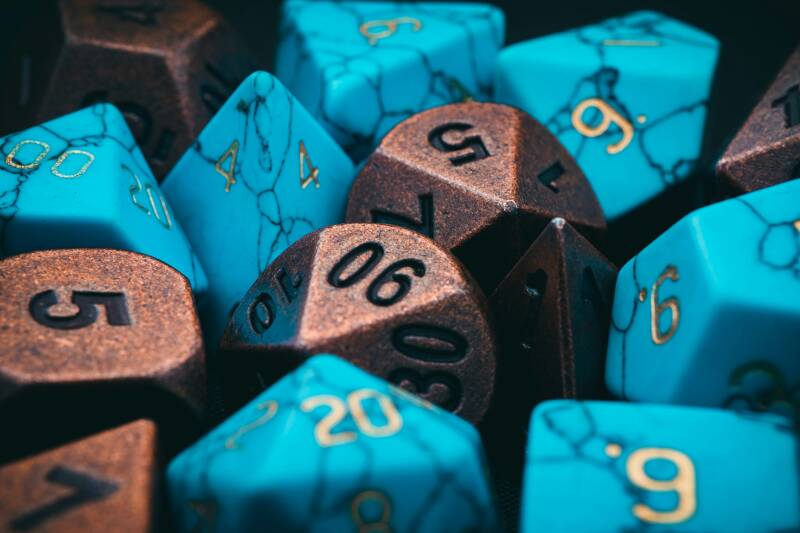
Different games for different purposes
Academics who study games have struggled to agree on what an RPG even is (which in and of itself says something about the variation this category is hiding). In a paper called The Many Faces of Role-Playing Games, researchers Michael Hitchens and Anders Drachen tried to pin down a definition by comparing seven very different forms of the hobby including TTRPGs, live action roleplay games (LARPs), and online games like World of Warcraft.
What they landed on wasn’t one simple trait, but a bundle: a split between players and a GM, characters that can develop under player control, a GM who adjudicates outcomes, wide-but-shallow interaction options, and an emergent (not authored) narrative.
That combination is exactly why two TTRPGs can look similarly thick and juicy on the shelf but feel completely different to play. Whether a game gives one person lasting authority over the world like the GM in D&D, or does away with it altogether and leaves the world up to a deck of cards like in Fiasco, according to Hitchens and Drachen’s own definition, it is one of the load-bearing features that makes something an RPG at all. It’s a rule the designers set in the text, not something the table votes on.
The same goes for how a game resolves outcomes. Their definition explicitly allows for a GM’s ruling with no dice or a quantitative system behind it all (for example, how Dread throws out dice entirely in favor of a physically collapsing tower).

We assume this is what game scientists look like
A few games worth trying
If you’ve written off RPGs because of one D&D session that didn’t agree with you, here are a few suggestions you might want to try. We will be having all these games and more in the coming months at our Community Campaigns session, hosted monthly at BrewStone in Swansea:
- Mothership is a sci-fi horror game, closer in spirit to Alien and Event Horizon than a fantasy quest. It asks you to survive, solve the puzzle, and save the day (usually you can only pick one) in a rules-light system. This game is a favourite of mine, and I’ll be running a one-shot of it at our first Community Campaigns session!
- Fiasco throws out the idea of a GM entirely. Everyone plays small-time crooks with big ambitions and terrible impulse control, and the game is essentially a machine for generating your own Coen brothers movie, complete with everything going wrong in increasingly spectacular ways. There's no dungeon, no boss fight, no experience points. It's pure collaborative storytelling with just enough structure to keep it moving. Sign up for a spot today at our October session!
- Heart: The City Beneath is technically a dungeon crawl, but a strange, story-forward one. Rather than "how much damage did you deal," the game is built around what your character is willing to lose in pursuit of an obsession. It's dark, unusual, and about desperation more than tactics. I will be running a one shot of this game in the coming months. If you’re interested, join our AfterGame group to be the first to see when it goes live
- Blades in the Dark might be the single most popular non-D&D RPG right now, and for good reason. You play a crew of scoundrels trying to make it big in a haunted, industrial fantasy city. Its core mechanic is built so that a character's position, desperate, risky, or in control, matters as much as their raw stats, and it has a clever system for skipping the tedious planning phase that heist games usually get bogged down in. It's spawned hundreds of other games using the same underlying engine. Look for it at one of our later sessions.
- Microscope is worth mentioning because it breaks the assumption that RPGs are about playing one character at all. There's no GM, no prep, and no single protagonist. Instead, a small group collaboratively builds the history of an entire civilization or era, jumping backward and forward in time to zoom in on whichever moments interest them. It's less "playing pretend" and more writing a history book together, in real time, and it's a good reminder of just how far the definition of "role-playing game" can stretch.
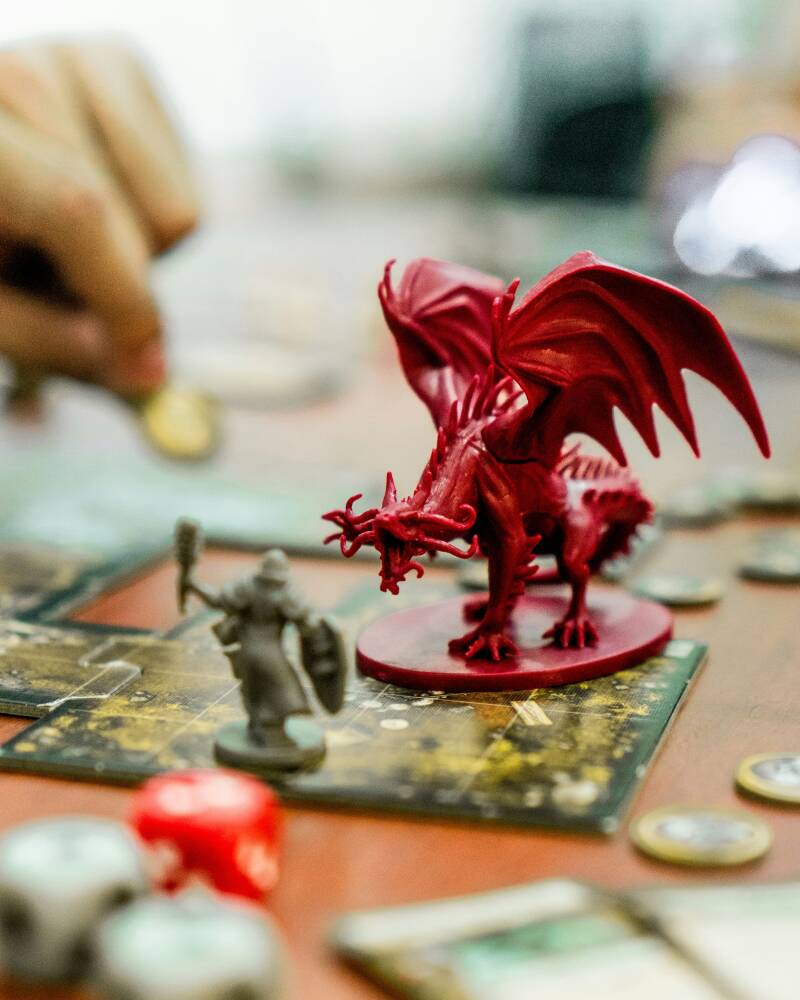
Find a game in your size
We've talked in the past about how RPGs don't require acting talent, an overactive imagination, or memorising a rulebook. If one RPG didn't land for you, that's one data point about one game, not a verdict on an entire hobby that runs from dungeon-crawling to collaborative heist-writing to building your own sense of dread from scratch.
Community Campaigns launches at BrewStone in Swansea on Sunday 11th October, with tables running D&D, Mothership and Fiasco, and it'll return on the second Sunday of every month after that. Tickets are available now; register yourself and sign up for a seat on AfterGame here. Come and find your next favourite hobby!
About the author

Max Gawryla is a Trustee at VoNCon, leading our outreach and fundraising events. He also volunteers as a Demogod at VoNCon's gaming sessions on the first Saturday of the month at Bryncoch Community Centre.
Please add a comment below or contact Max through info@voncon.org to discuss his post.
Add comment
Comments